
How exceptional customer experience actually happens.
Building an outsourced CX team isn't just about picking up calls — it's about engineering empathy, speed, and continuous refinement into every single customer touchpoint.
Below is our complete six-step operational lifecycle: from hearing what your customers need, to multi-channel routing, queue elimination, quality coaching, authentic conversations, and the unified agent cockpit that powers it all.
Dedicated Pod Architecture
Agents trained exclusively on your brand voice, tools, workflows, and escalation paths.
Two-Week Rapid Onboarding
From scoping call to live coverage with rigorous QA and continuous metric tracking.
99% SLA & Quality Adherence
Multi-tier supervision and regular sentiment analysis ensure consistent excellence.
Step one — listen
Every customer has something to say.
Great customer experience doesn't start with a script — it starts with hearing the person on the other end of the line. Press play and listen in on how a handled conversation sounds.
Illustrative conversation — visual playback, no audio.
Transcript
Waiting for the line to open…
Step two — connect
Your customers don't care which channel they use.
They just want an answer.
One person, five ways of reaching you. Pick a channel — we staff every line with the same context, the same tone and the same runbook, so the conversation never restarts.
One
Customer
Phone
Step three — respond
Less waiting. More conversations.
Drag the handle to staff the line. Every square is a customer holding for an answer.
Without dedicated support
127customers waiting
14.0 min
Avg. hold
2
Agents on shift
Better coverage. Less waiting.
Illustrative scenario for demonstration only — not measured company performance.
Step four — improve
What better CX looks like.
Same inbox, same customers, different operation. Drag the divider across the console or tap to slide.
0
unanswered
3
waiting
✓
resolved
Call answered in 14s
Logged + tagged
"That's sorted, thanks!"
Chat closed 2 min
Ticket #2841 resolved
Same-day close
Inbox at zero
All threads replied
47
unanswered
18
waiting
12
unresolved
Missed call — 4 attempts
No callback logged
"Is anyone there?"
Chat open 41 min
Ticket #2841 escalated
Overdue by 3 days
Email backlog
31 threads untouched
Illustrative scenario for demonstration only — not measured company performance.
Step five — deliver
The conversation that starts every account
Every partnership begins the same way: a problem said plainly, and an operation built around it. This is how that exchange usually runs.
Illustrative conversation composed from our own onboarding process — not a named client statement.
Conversation thread
OpenCustomer
We needed someone who could handle our support volume.
Team
We built a dedicated support workflow around your business — scripts and runbooks written with you, then trained against real tickets.
Customer
Our response times improved dramatically.
Team
Same pod, named team lead, weekly reporting. Inbound, outbound, chat, email and technical support on one line.
Customer
Now it feels like they work here.
Step six — the desk
Everything we run for you sits on one desk.
Tap any object to inspect
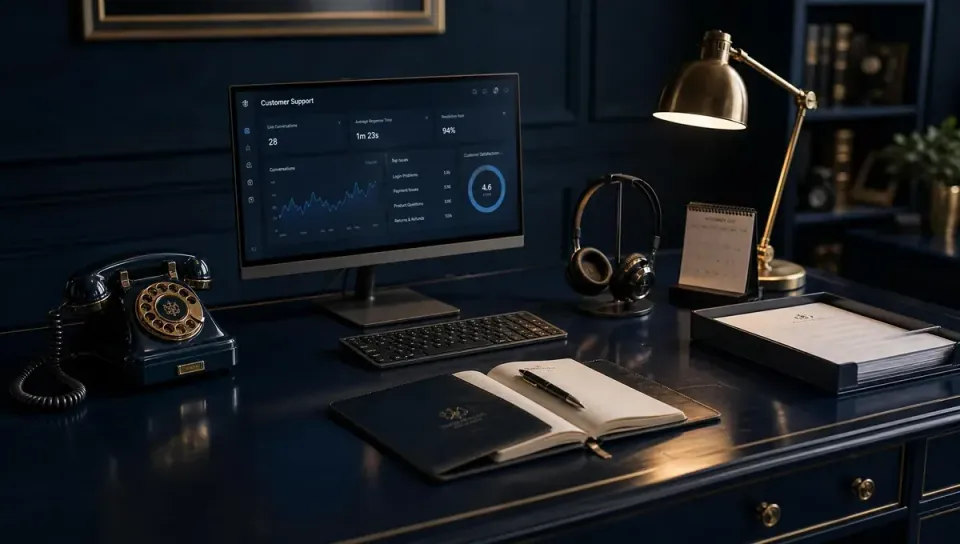
Select an item on the desk:
Onboarding Timeline
From first call to live coverage in three moves
Our structured onboarding gets your pod live and taking tickets in two weeks without disrupting your existing team.
- 01
Scoping Call
30 minutes to map volumes, channels, operating hours, and the CRM/helpdesk tools your team already lives in.
- 02
Pod Design & Training
We hand-pick agents, build customized scripts and runbooks with your feedback, then train against real historical tickets.
- 03
Go Live & Continuous Tune
Soft launch with 100% QA in week one, followed by scheduled weekly reporting and transparent metric reviews with a named team lead.
That's your quote calling. Pick up the receiver and we'll price it in one business day.
Answering takes three short steps — what to pick up, how big the operation is, and where to send the numbers. No sales maze, no 20-field form.
Answer the call — get a quote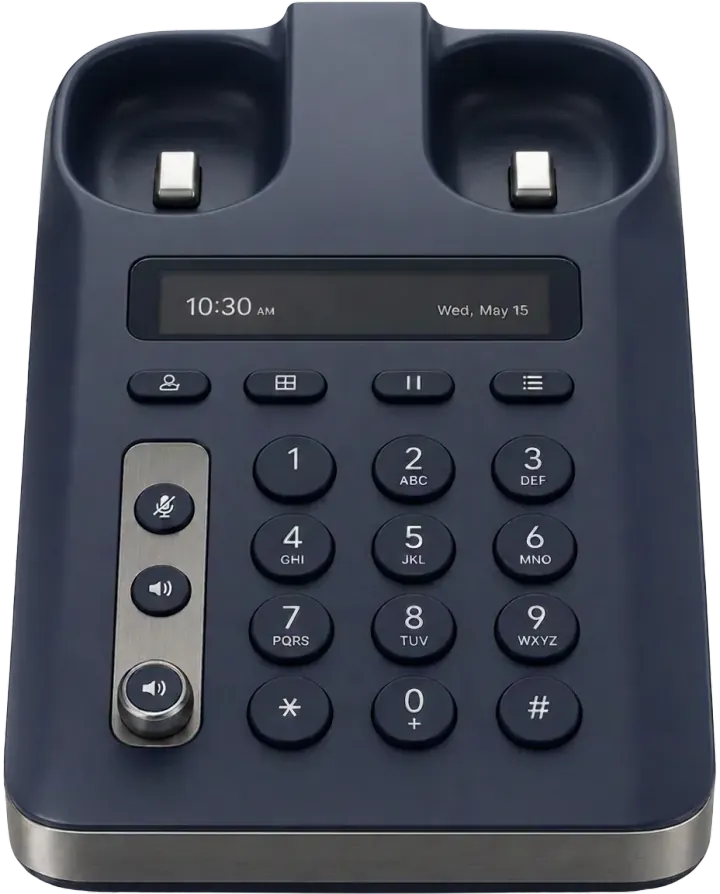

Tap the phone to answer